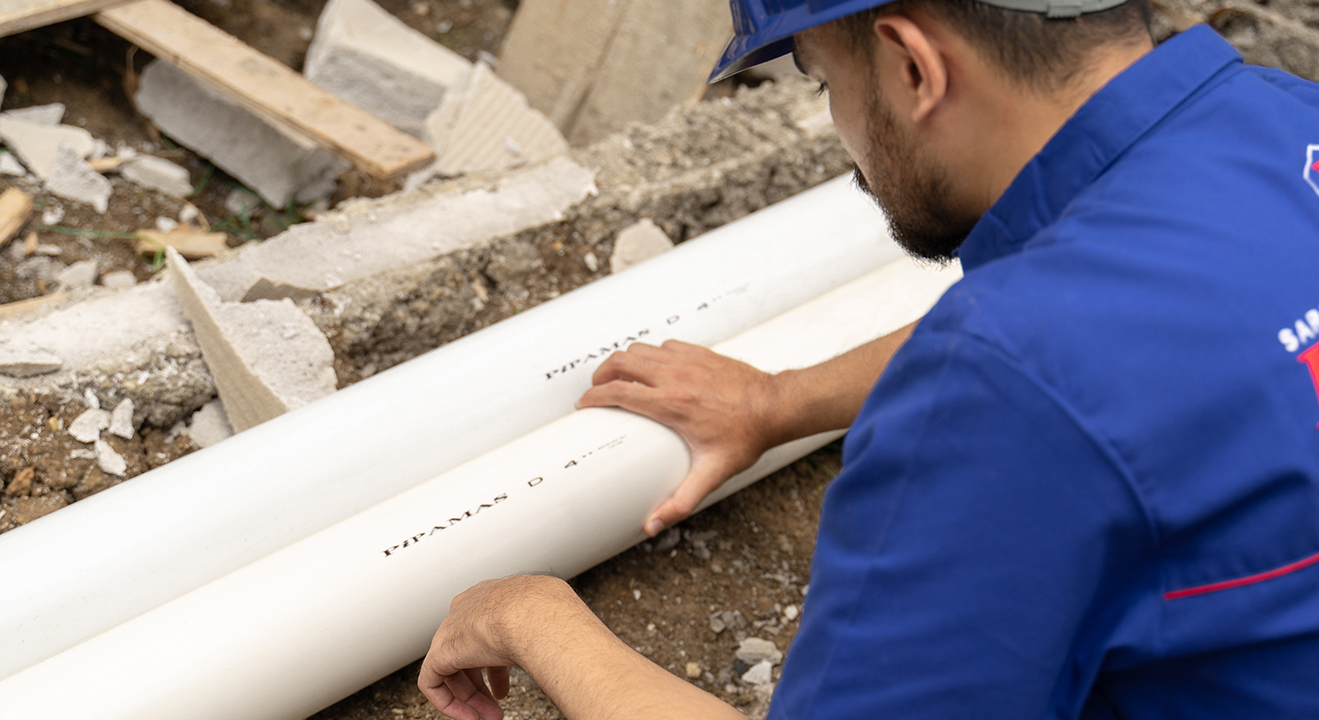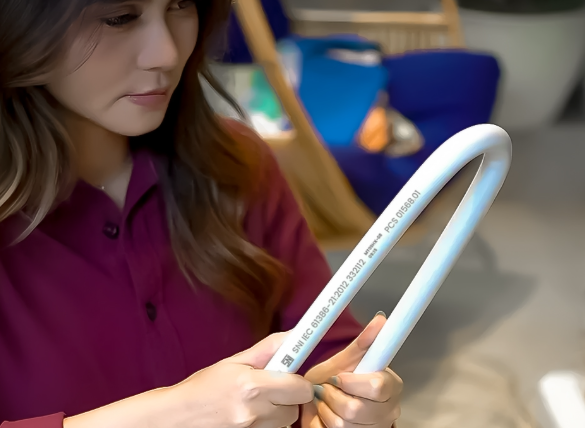

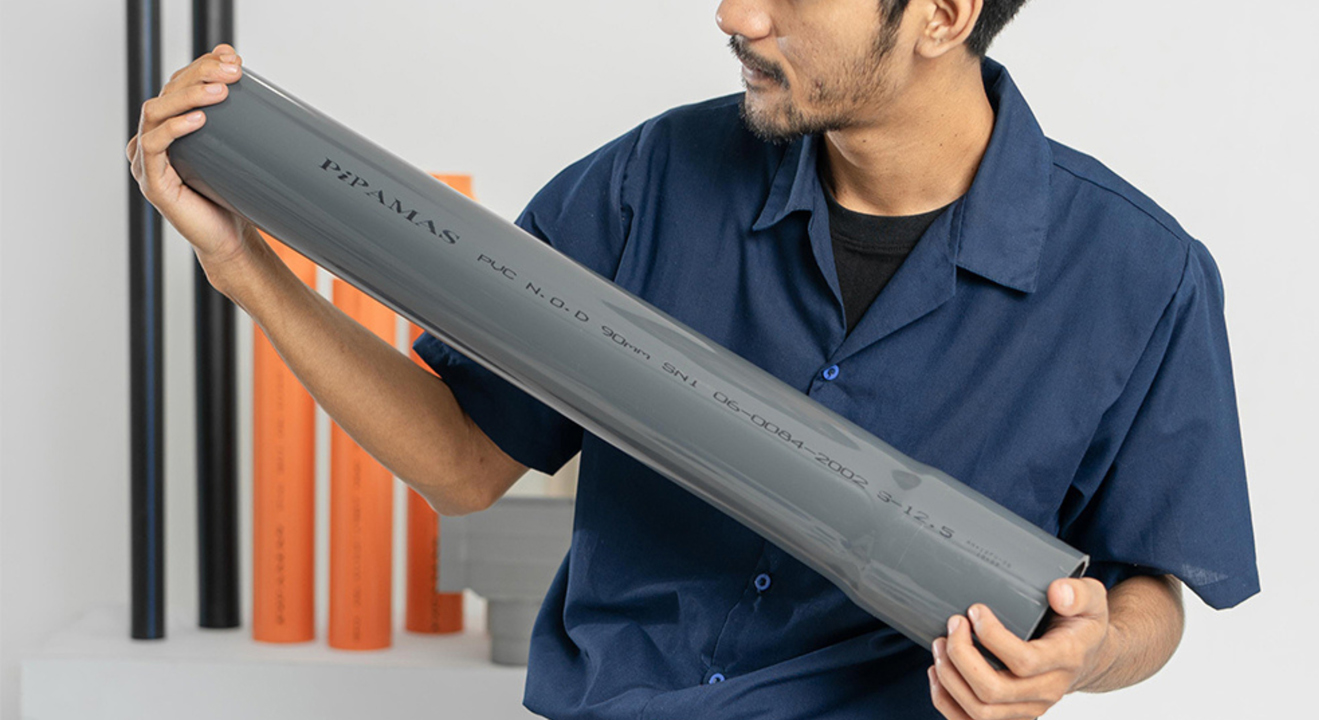
The Solvent Cement Joint (SCJ) method is a PVC pipe jointing technique that utilizes a specialized chemical adhesive to create a strong, permanent bond. This method is widely deployed in both pressurized clean water installations and non-pressure pipelines due to its ability to form a completely watertight seal. As a trusted piping system solution provider, PIPAMAS recommends implementing the SCJ process strictly according to standard procedures to achieve maximum installation performance and long-term durability.
Tools and Materials Required
Before beginning the jointing process, ensure you have prepared:
-
Two pieces of PVC pipe
-
Tape measure
-
Specialized PVC solvent cement and an application brush
-
Clean cloth/rag
Utilizing the correct tools will ensure the installation process is cleaner, neater, and more efficient.
Step-by-Step Guide for the SCJ Method
Measuring the Socket Depth
The first step is to measure the depth of the pipe socket. Use a tape measure to determine exactly how far the pipe will insert into the socket, then mark this distance on the spigot end of the pipe. This visual marker is critical to ensure the pipe is seated perfectly in the correct position.
Cleaning the Pipe Surface
Next, thoroughly clean the pipe surfaces. Use a clean cloth to ensure that both the exterior of the pipe end (spigot) and the interior of the socket are completely free from dust, oil, moisture, or other contaminants. A clean surface allows the solvent cement to bond optimally on a chemical level.
Applying the PVC Solvent Cement
The next step is applying the specialized PVC solvent cement. Use the application brush to apply an even coat of solvent cement onto the exterior of the pipe end. Ensure the layer is not excessively thick but completely covers the entire surface area that will mate inside the joint.
Connecting the Pipes
Immediately after applying the solvent cement, insert the pipe into the socket. Push the pipe firmly until it reaches the depth marker line drawn previously. Ensure the pipe enters perfectly straight to prevent any misalignment or crooked joints.
Allowing the Joint to Cure
The final stage is allowing the solvent cement to dry and set. Leave the joint undisturbed for the duration specified by the solvent cement manufacturer's instructions before introducing water flow or pressure into the system. This curing process ensures the joint becomes fully secure, structural, and safe for operational use.
Conclusion: Precision Jointing for Long-Term Reliability
The Solvent Cement Joint (SCJ) method provides a robust and permanent PVC pipe connection solution when executed correctly. By combining high-quality PVC pipes from PIPAMAS with proper installation procedures, your piping network will be more reliable, neatly aligned, and feature an extended operational lifespan.